
BlindMaps
Co-founder · Interaction design · 2012–2015
An open initiative for independent mobility
The city.
At your fingertips.
How can we help blind and visually impaired people explore an unfamiliar city—without getting in the way of the senses they already rely on?
A small idea, a much bigger question.
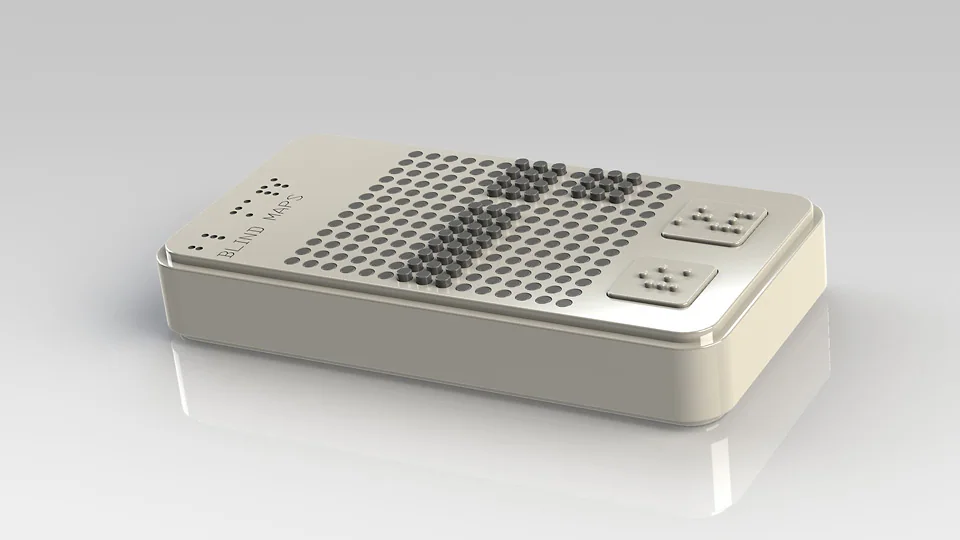
BlindMaps began as a 36-hour investigation at the Copenhagen Institute of Interaction Design in January 2012. We imagined a handheld interface that could make a route tangible through moving, Braille-like pins.
When the concept was published, people contacted us asking whether they could get one for themselves or a family member. That response pushed us to take the idea further. Together with Andrew Spitz and Ruben van der Vleuten, I developed BlindMaps into an open research project about independent mobility.
The most useful thing we learned:
start with the cane.
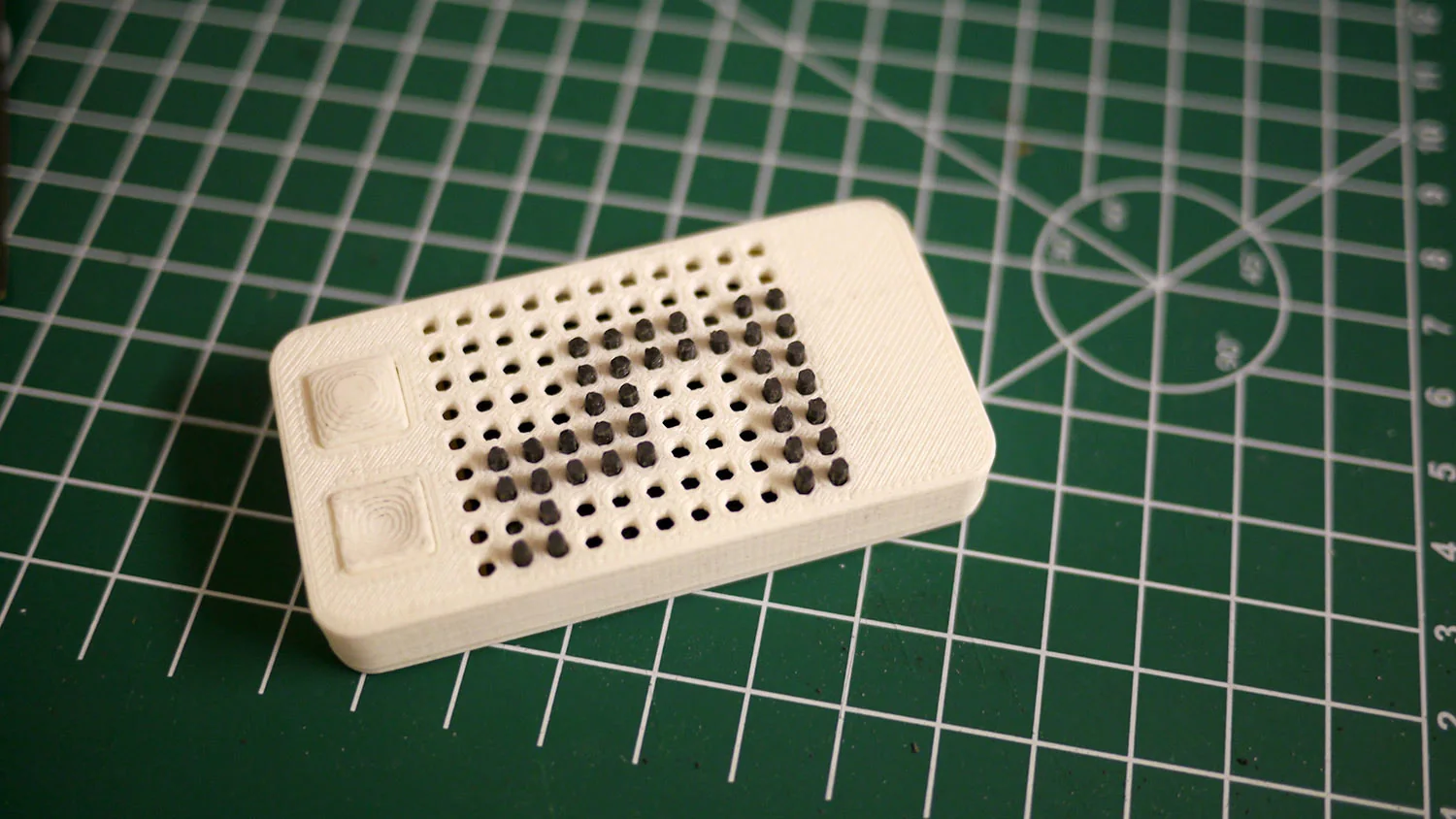
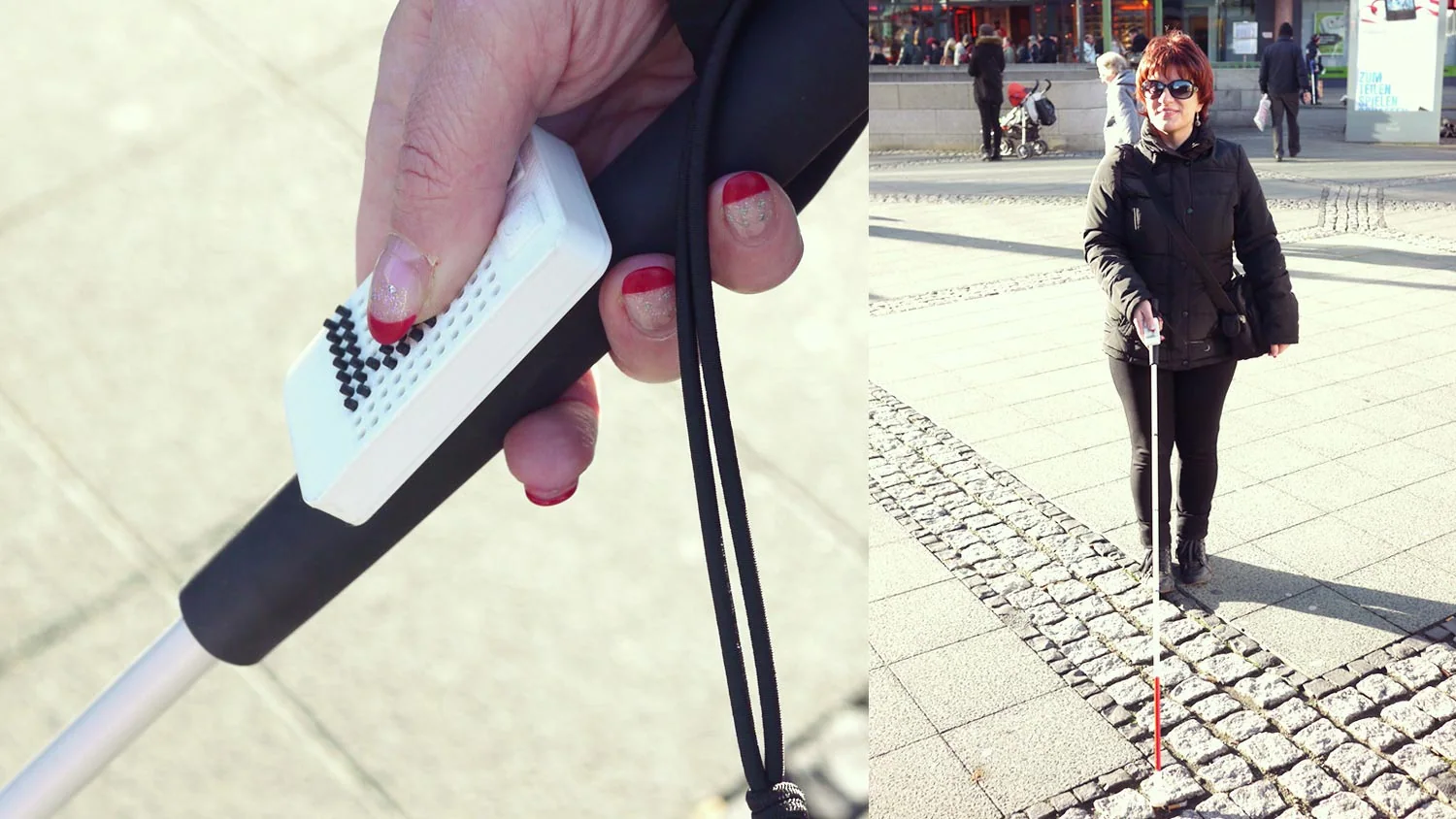
In 2013, we continued the project through the CreativeRegion / Cross-Innovation programme in Linz, Berlin, and Amsterdam. We made prototypes at FROLIC Studio and tested them on Berlin’s streets with Silja Korn.
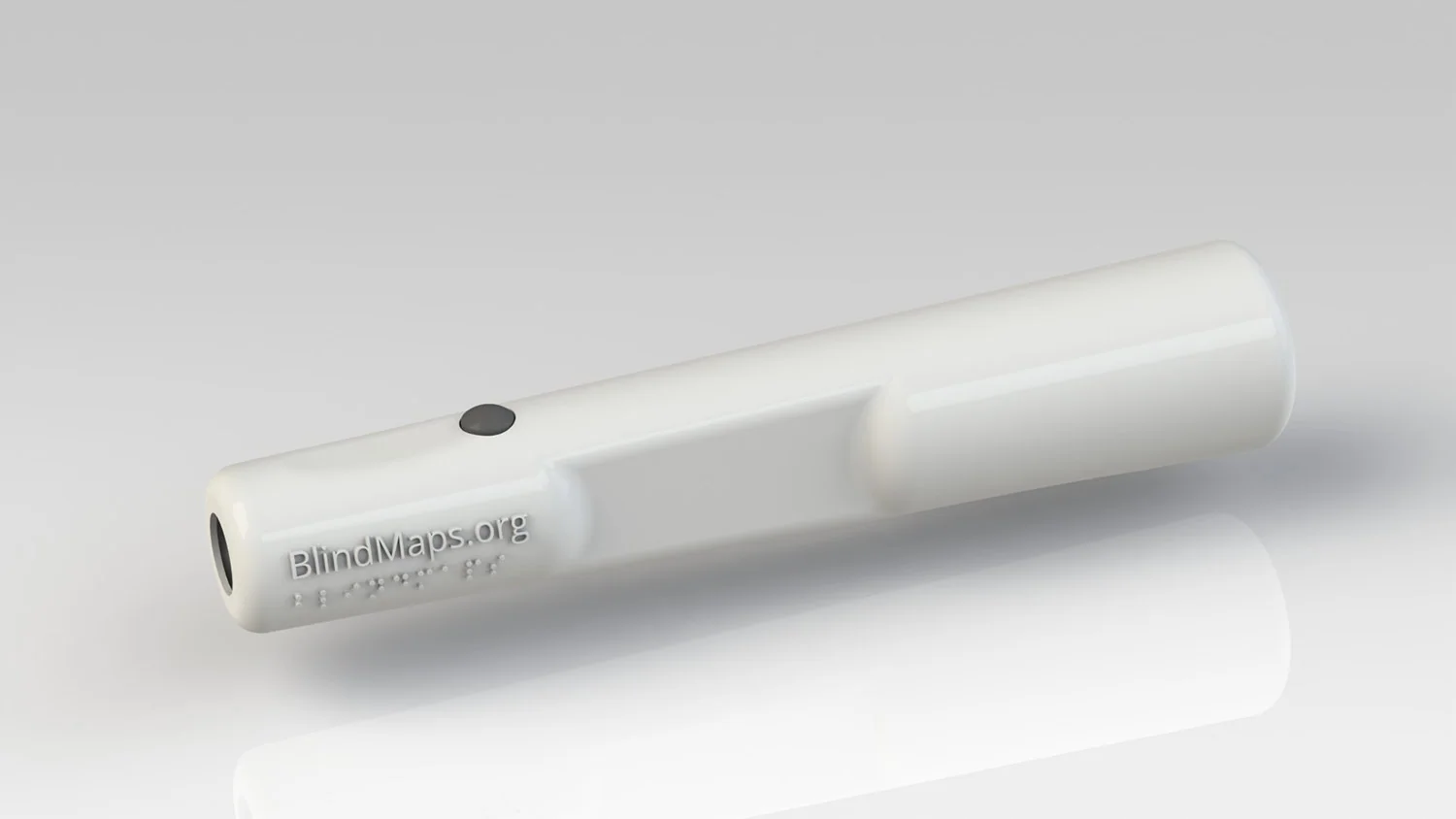
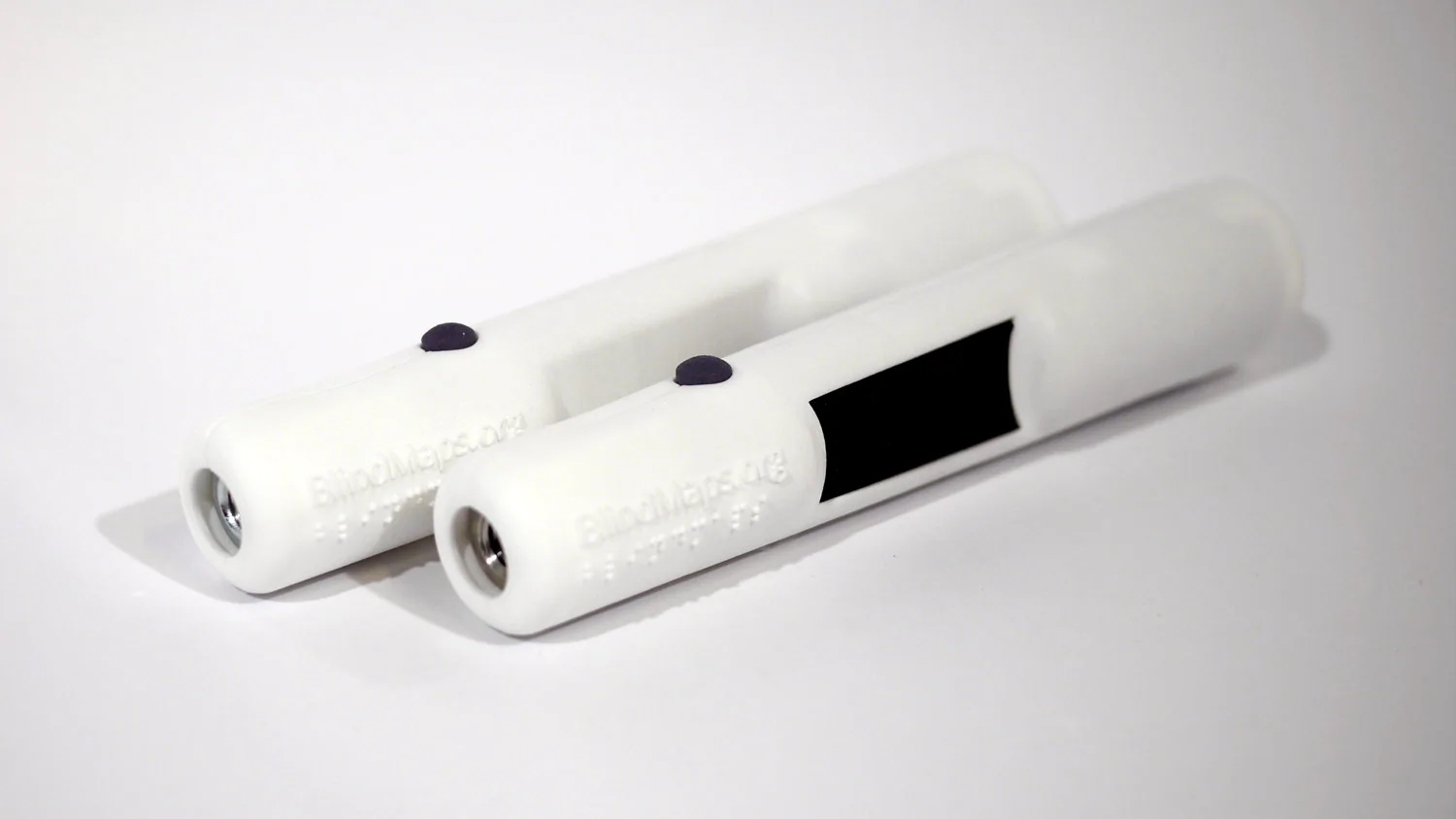
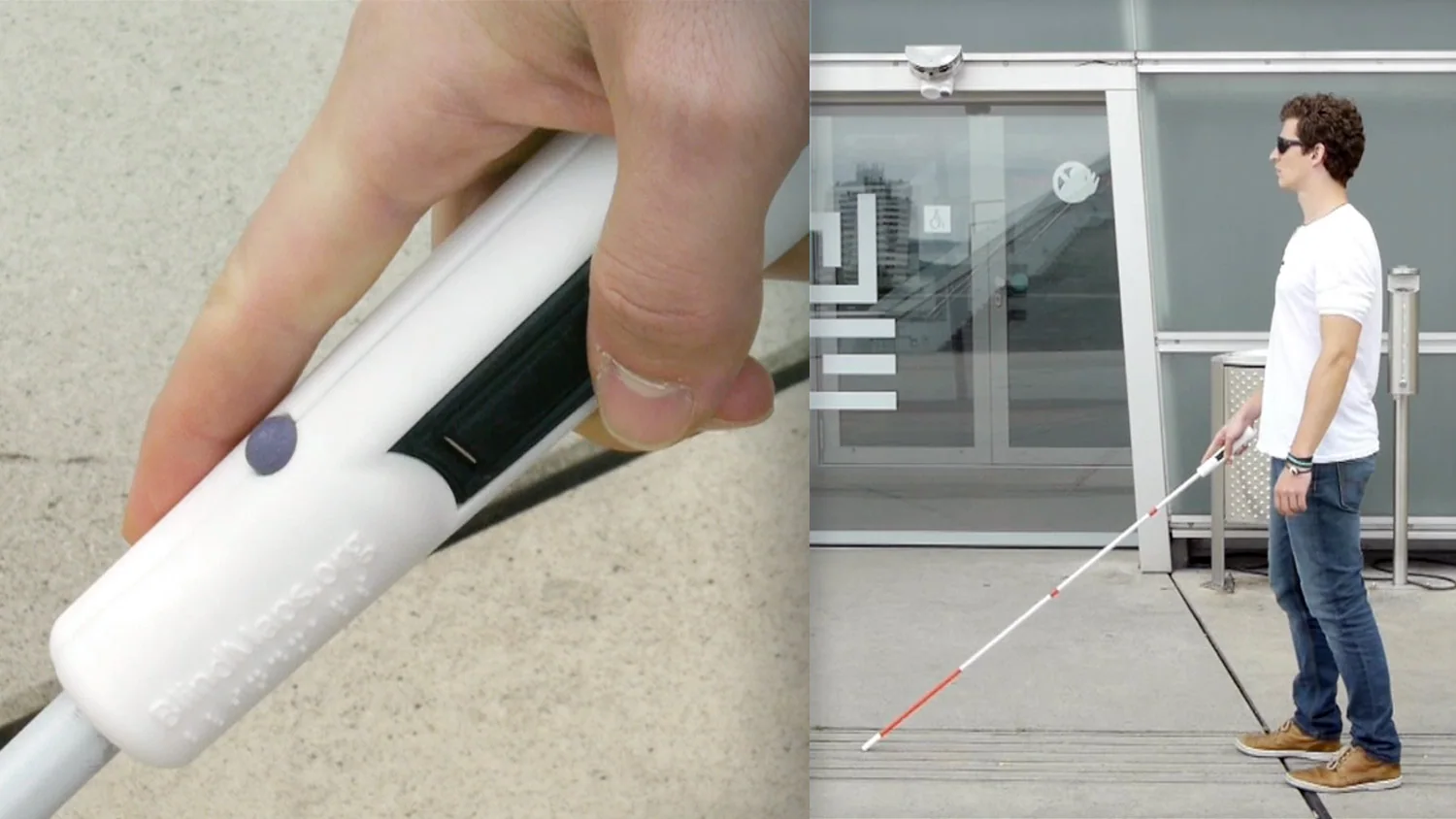
The feedback changed our direction. People wanted something integrated into the white cane they already used. The moving pins were complicated to read and difficult to build. We moved towards a smaller, more practical idea: a modular grip made with affordable, available technology.
The interface
One familiar object.
More ways to find your way.
Find a place
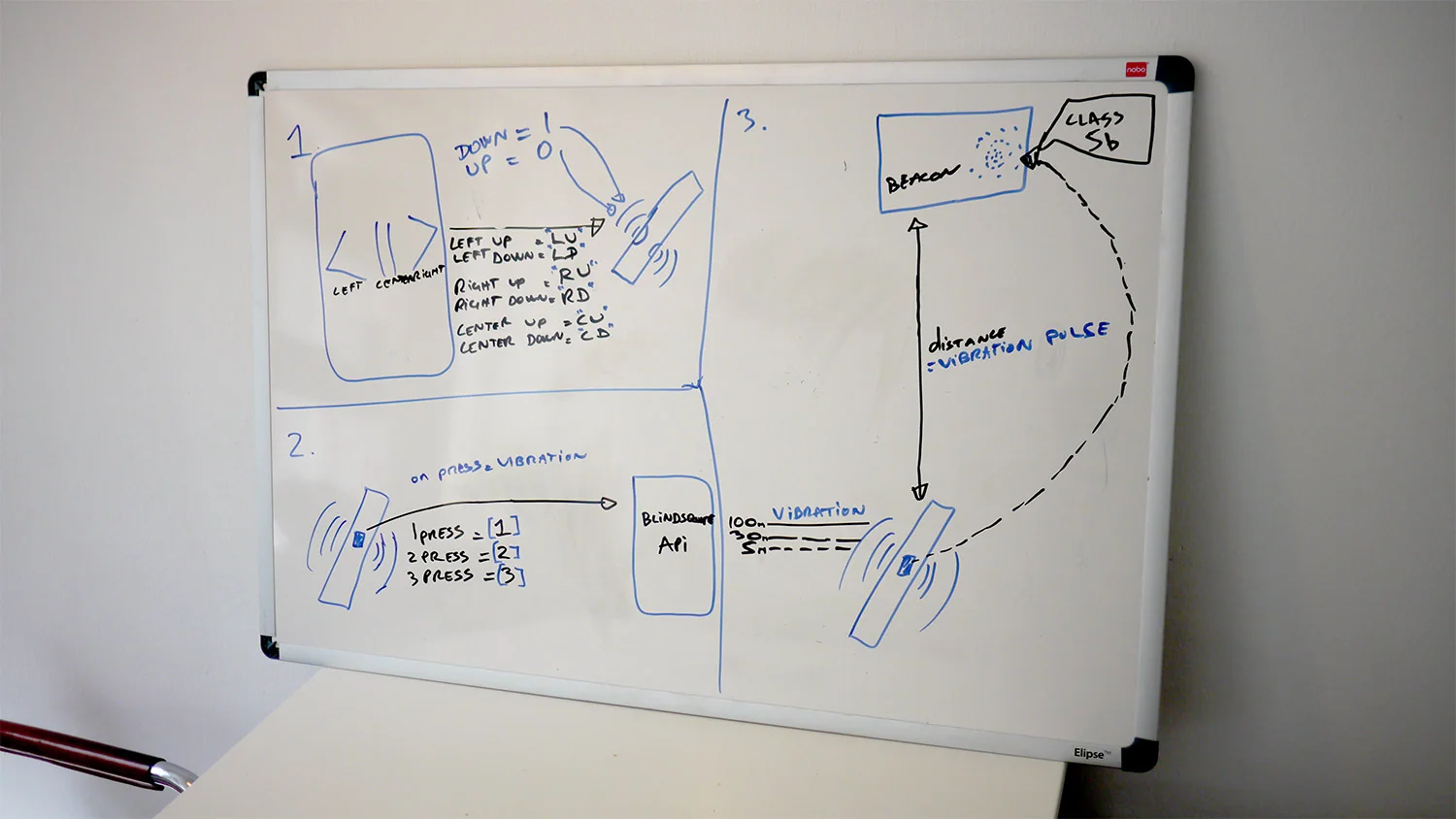
A button on the grip triggers a nearby beacon to announce its location. Vibration patterns give feedback as someone approaches.
Keep the phone in your pocket
The grip acts as a remote for the BlindSquare iPhone app, giving access to location information, saved places, and nearby points of interest.
Connect to the city
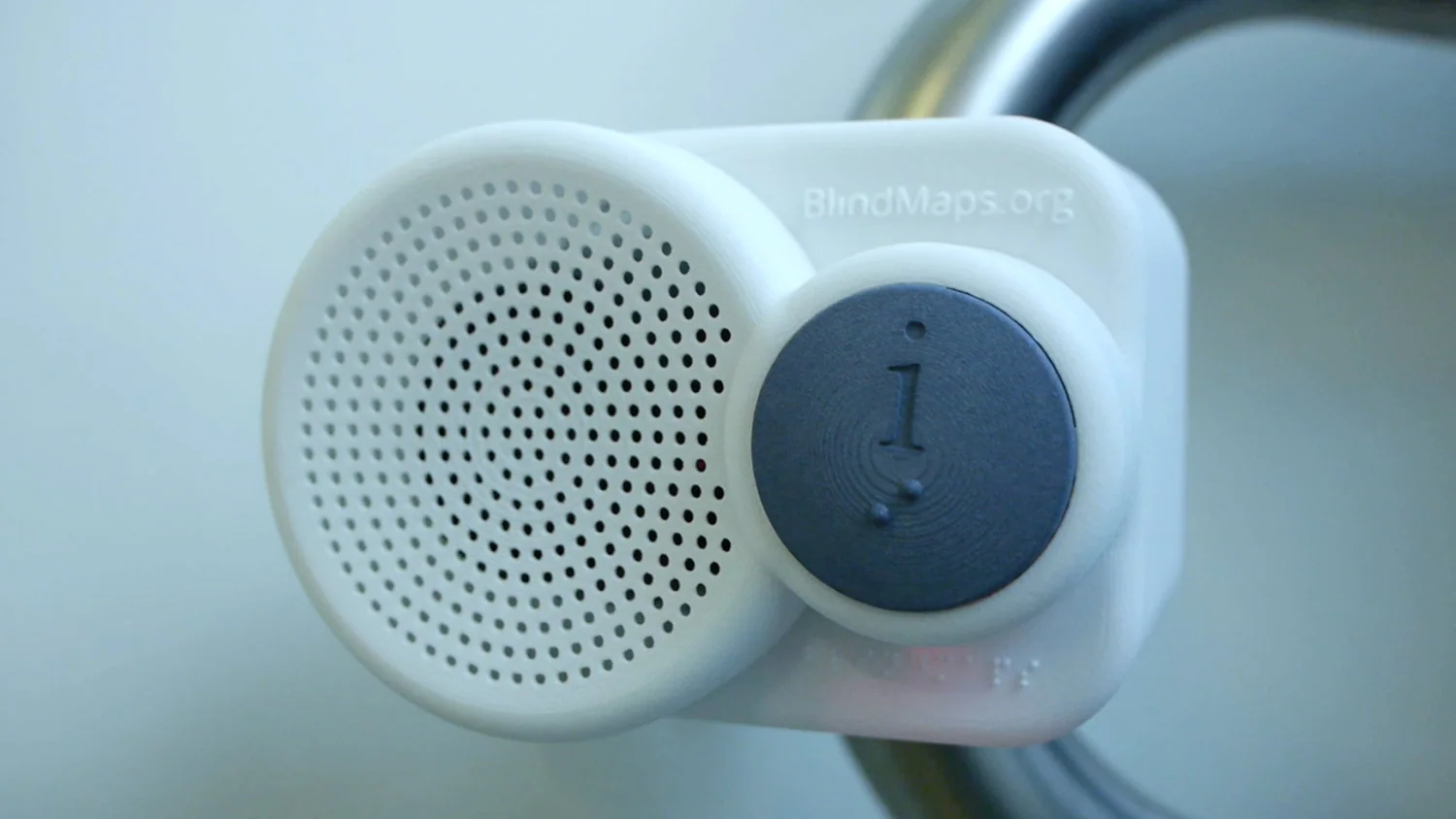
We explored using the grip with existing public-transport information systems, so a person could request a spoken announcement with a button press.
Build. Try. Learn. Repeat.
We used Bluetooth Low Energy to connect the grip, phone, and beacons. RFduino gave us a small, low-power Arduino-based platform for the prototypes. We started with 3D-printed forms and moved to nylon-based versions once the shape and feel worked.
An Ars Electronica Next Idea grant in 2014 supported another round of development and user testing. Working with blind participants and BlindSquare creator Ilkka Pirttimaa helped keep the project grounded in real situations.
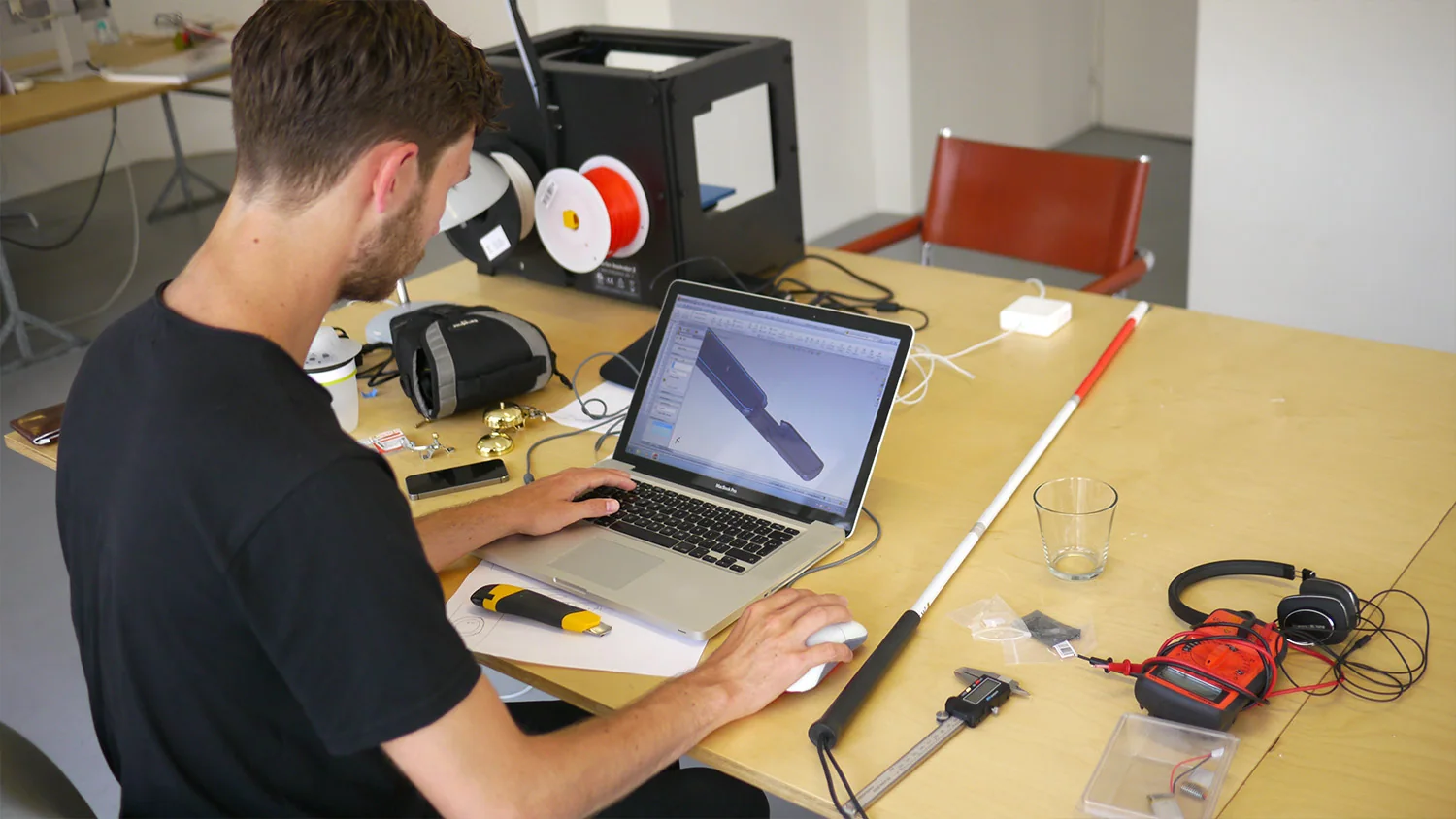
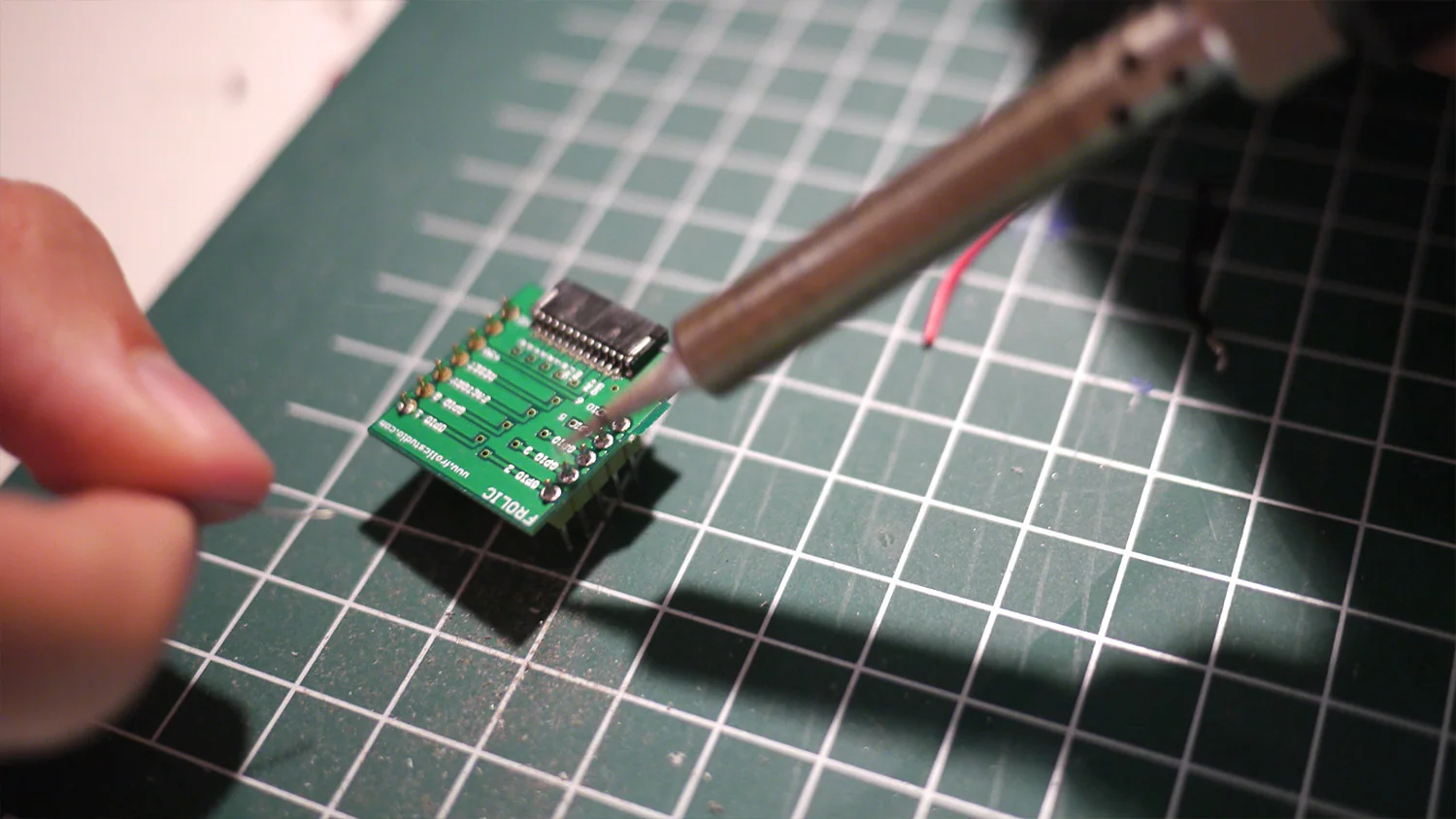
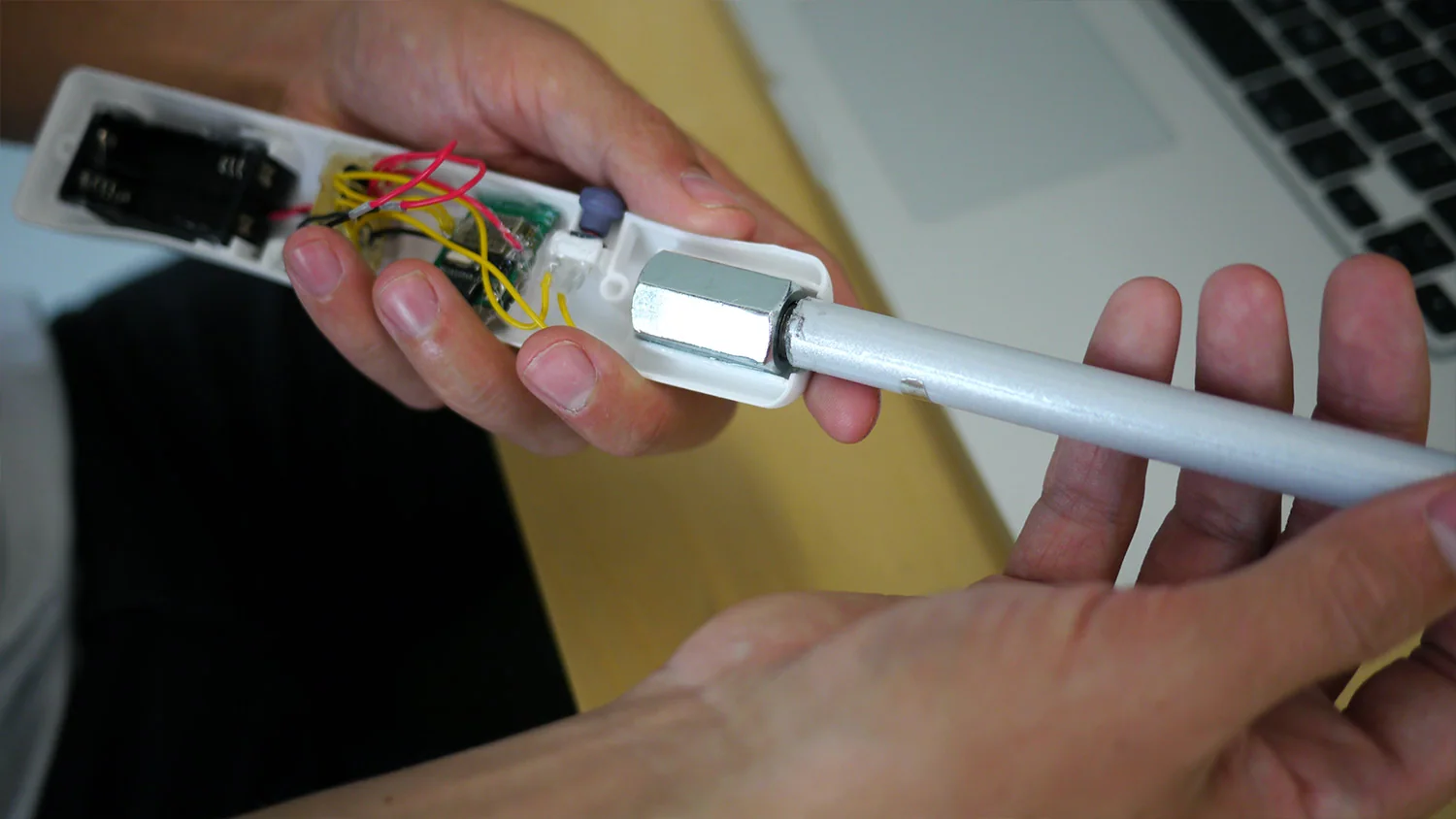
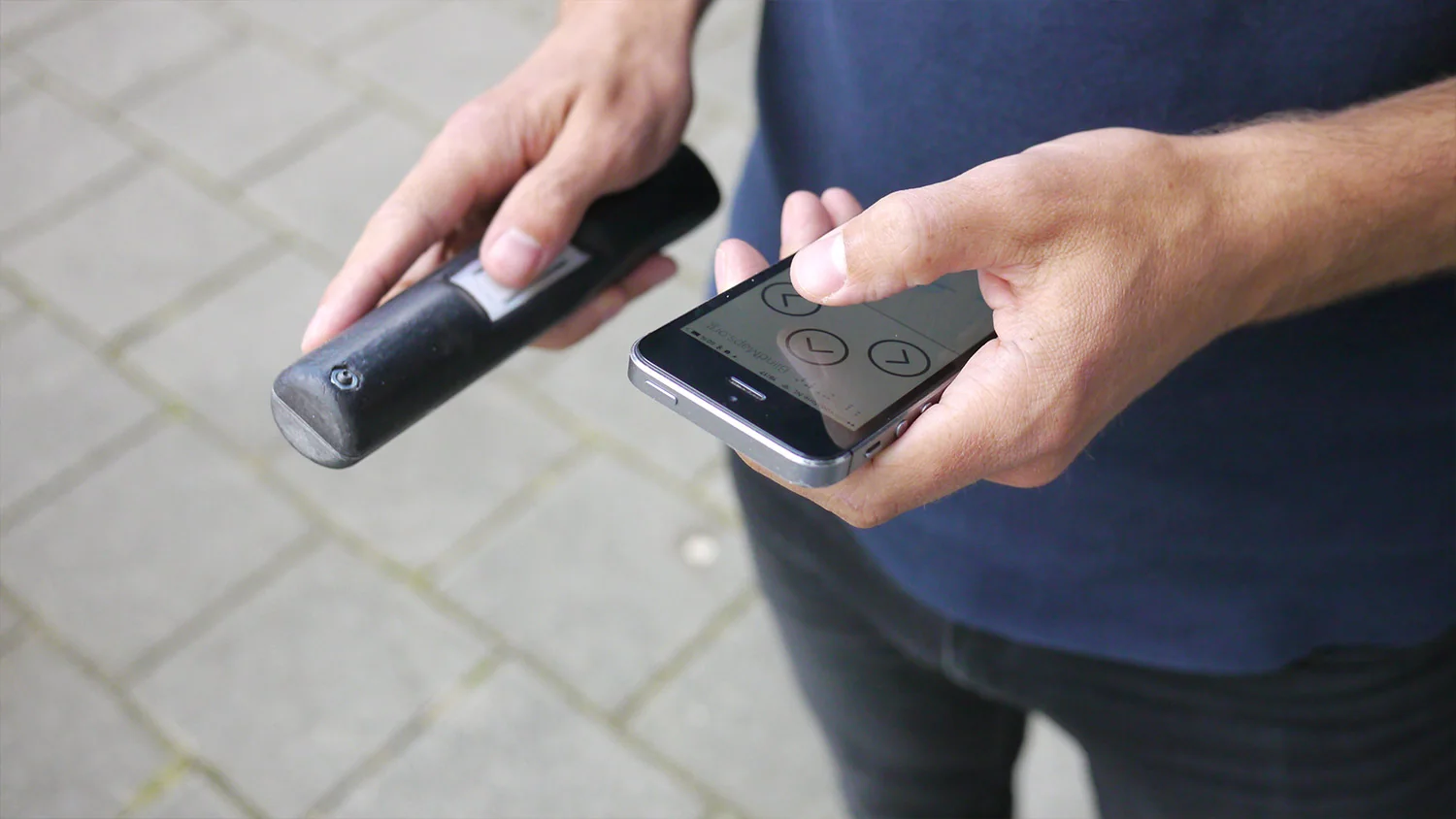
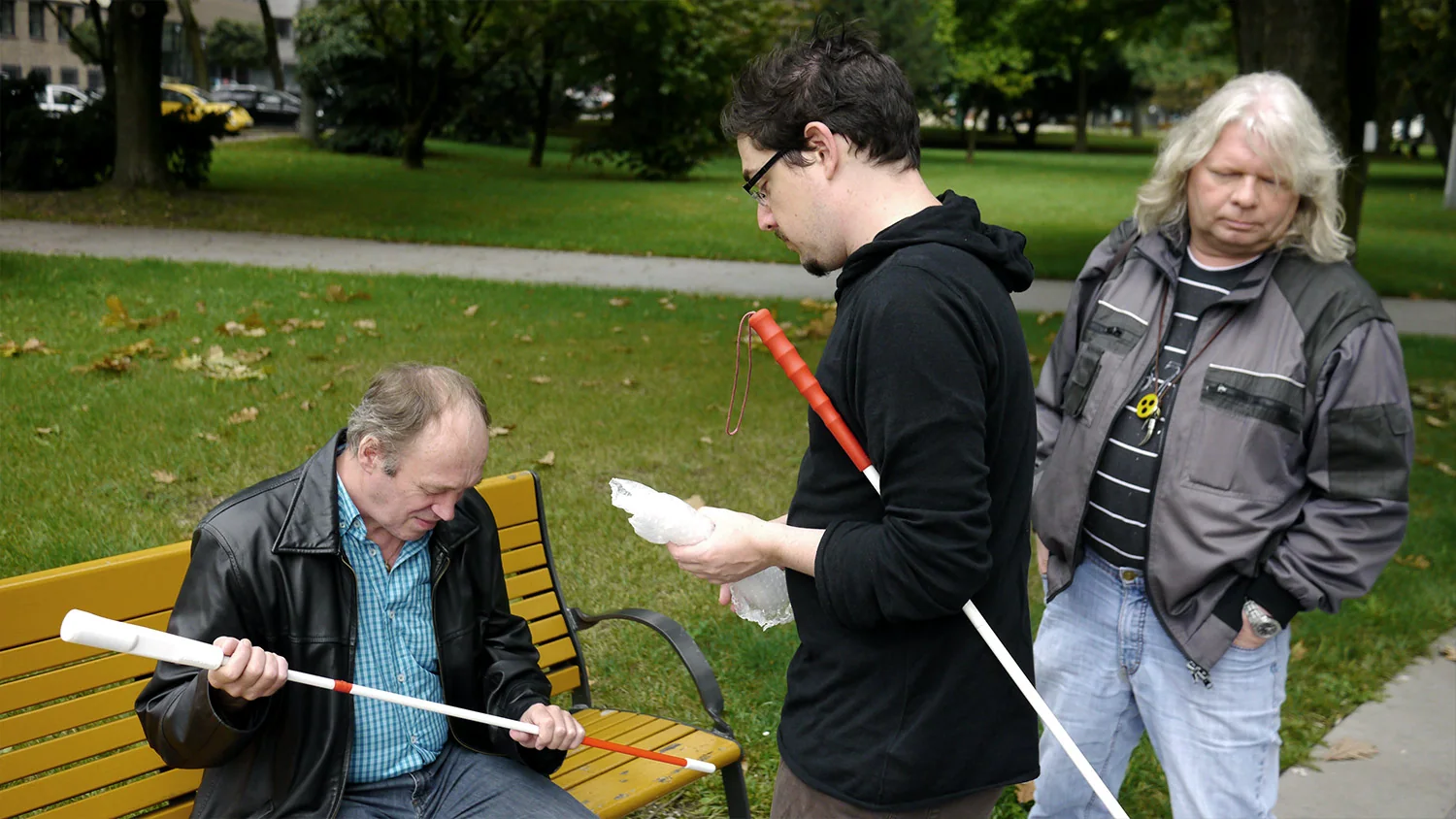
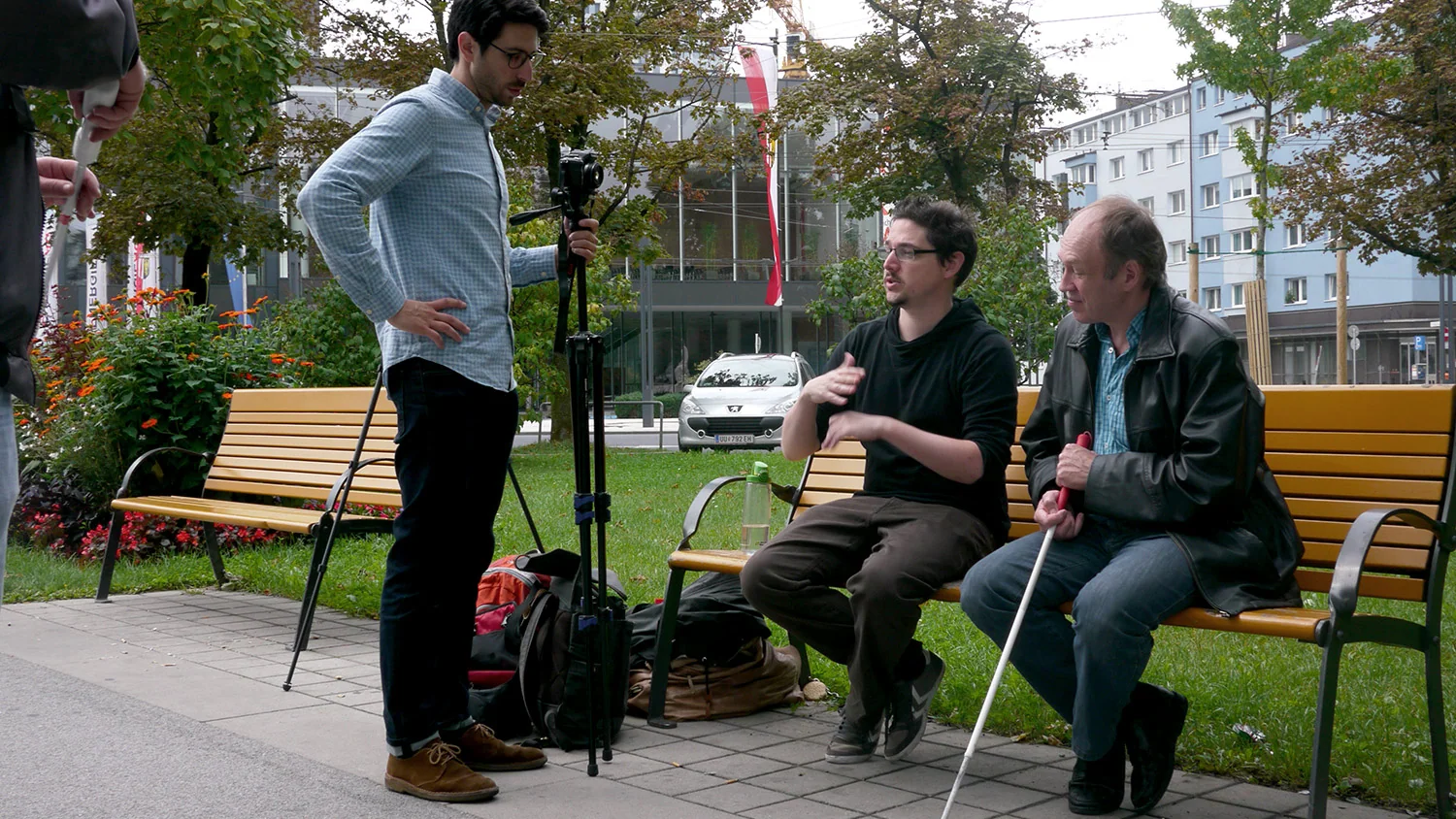
See the prototypes in action.
More from the project: our Ars Electronica and voestalpine interview, 2014 ↗
Open by design.
BlindMaps was always about more than a single device. We wanted an open, modular ecosystem that people could adapt, repair, and connect to existing services. The project received the Prix Ars Electronica Next Idea award in 2014 and an IxDA Interaction Award in the Empowering category in 2015.
The project’s documentation and media remain at BlindMaps.org. They capture the prototypes and ideas from that period; this was a research initiative, not a finished navigation product.
Core team: Markus Schmeiduch, Andrew Spitz, and Ruben van der Vleuten (FROLIC Studio).
With thanks to: Ilkka Pirttimaa, Silja Korn, Gerhard Hojas, Martin Marchstein, Michael Platz, Georg Molzer, and Claudia Schnugg; and our partners CIID, CreativeRegion, Cross Innovation, Ars Electronica, and voestalpine.
Images and project documentation: BlindMaps.org, CC BY-NC 4.0. Images resized and compressed for this page.